Caru Programme
Caru - Supporting Care and Compassion at End of Life in Nursing Homes
The Caru Programme is delivered by the Irish Hospice Foundation and the All Ireland Institute of Hospice and Palliative Care in partnership with the HSE.
The Caru Programme is a continuous learning programme that aims to support and empower nursing home providers and staff in the delivery of palliative, end-of-life, and bereavement care to residents. The overall aim of the Caru Programme is to support enhanced quality of life and a good death for residents, while easing the bereavement process for families and staff.
Caru will support and improve:
- Staff confidence in having conversations with residents & families about death and dying
- Increases staff communication with residents and families on their future care wishes
- Advance Care Planning by establishing the residents’ wishes and preferences for their end-of-life care
- Planning and preparation for end-of-life care based on the residents’ wishes and preferences
- Integration of end-of-life care planning with relevant community services such as: specialist palliative care, GPs, funeral directors, acute hospitals etc.
All staff, healthcare professionals and non-clinical staff, ensuring they have the appropriate level of knowledge, skills, competence and confidence to care for residents approaching end of life through the multidisciplinary structure of Caru.
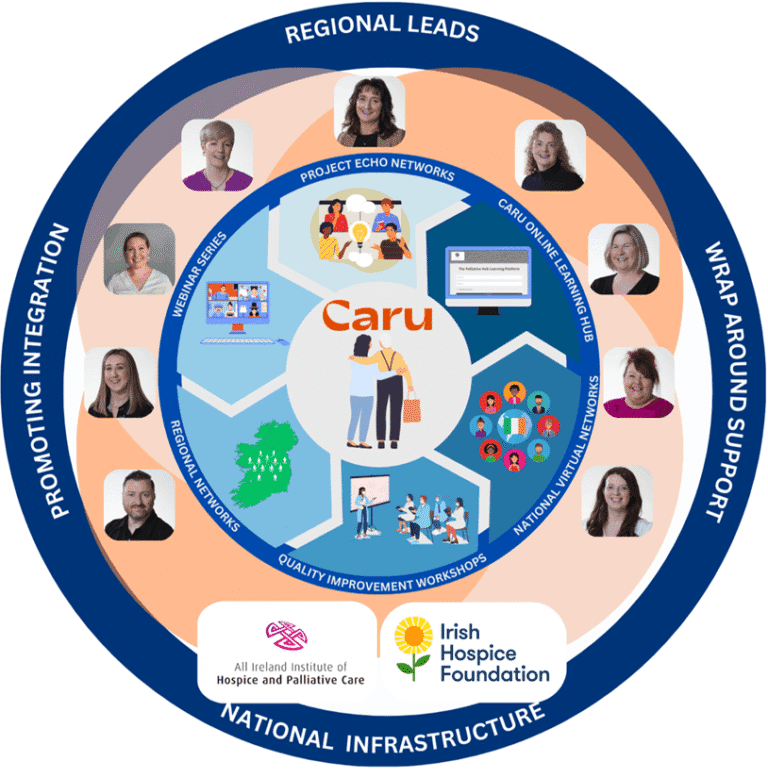
The Caru programme contains the following five components which work together to provide a comprehensive, continuous learning pathway. This structure enhances nursing home staff’s knowledge, skills, and confidence in delivering person-centred palliative, end-of-life, and bereavement care to residents.
- Caru Webinars AIIHPC facilitates 6 webinars annually, on a wide range of topics which reflect the complexity of both palliative care and the care of older people. These include areas such as clinical knowledge, symptom recognition, patient management and awareness of current best practices.
- Project ECHO Nursing Home Knowledge Networks – have been established in each of the nine Community Health Organisations (CHO) across the Republic of Ireland. The aim of these online networks is to develop the knowledge, skills, and confidence of nursing home staff in caring for residents with life-limiting conditions. Participation is free and open to all nursing homes, and it provides a valuable opportunity to network and share practice with a wide range of your peers.
- The Caru Learning Hub – is an online learning management system to support the programme on the Palliative Hub – Learning Platform. It provides access to webinars, recorded ECHO sessions, resources, and self-directed content, supporting continuous learning for nursing home staff at any time.
- Quality Improvement Workshops – These workshops are practical sessions designed to help nursing homes implement and embed end-of-life care planning using a continuous quality improvement (QI) approach. Staff can enhance skills in communicating with residents and families, advance care planning, symptom management, and integrating care with relevant community services
- National and Regional Networking Events – Caru hosts in-person networks and events, facilitating peer-to-peer learning and sharing of best practices. These sessions support professional development, build confidence and strengthen collaboration between nursing home staff, specialist palliative care teams, and the wider care community.
For further information on the programme see the Caru Programme website https://caru.ie
Caru Programme Evaluation – The Phase 2 midline Caru Programme evaluation report has been published by the independent University College Dublin research team which is led by Professor Jonathan Drennan. A copy of the evaluation executive summary is available here. The findings indicate that higher engagement by nursing homes and nursing home staff with Caru training elements are associated with:
- Higher self-efficacy
- Greater person and family-centred care
- Stronger cultural and ethical values in care
- More effective end-of-life communication
- Positive change in attitudes towards palliative care from curative care
- Improvements in competence and confidence among staff
- Observable organisational practices