This policy offers an opportunity to develop the governance, coordination, and delivery of palliative care services in line with existing and emerging structures such as the HSE Health Regions as well as programmes such as the Enhanced Community Care (ECC), National Cancer Control Programme (NCCP), and National Traveller Health Action Plan (NTHAP).
The HSE National Adult Palliative Care Policy Implementation Plan sets out a detailed roadmap to implement the Department’s of Health’s 2024 National Adult Palliative Care Policy. The plan was developed in partnership with statutory, voluntary and community stakeholders, and includes measures to strengthen public understanding of palliative care, develop new facilities, enhance the palliative care workforce, and deliver more palliative care education to health care professionals.
See press release for further information (Link),
See link to the plan (Link)
The PCNA is a tool developed to support professionals in assessing the current and future palliative care needs of patients with life-limiting conditions. The primary outcome of a PCNA is to identify current needs and create an appropriate care plan to meet those needs.
The eLearning Programme aims to ensure that people with palliative care needs will have the needs of greatest concern to them identified and responded to by skilled and confident staff across all care settings.
The programme was established in 2010 and aims to ensure that persons with life-limiting conditions and their families can easily access a level of palliative care service that is appropriate to their needs.
This framework offers practical, strategic approach for developing palliative care services in Ireland.
It is anticipated that the need for palliative care services will increase in coming years. Population projections indicate that between 1996 and 2031 the population aged 65 years and over is expected to more than double.
Palliative care is care that improves the quality of life of patients and theirfamilies who are facing the problems associated with life-limiting or life threatening illness.
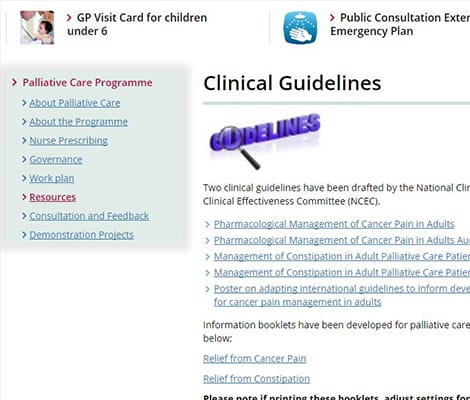
Clinical guidelines for adults on Pharmacological Management of Cancer Pain and Management of Constipation in Palliative Care have been published by the National Clinical Effectiveness Committee (NCEC).
The aim of this framework is to provide a consistent language and set of descriptors that healthcare providers and planners can use when describing palliative care services and use as a tool when planning service development.


The development of the Palliative Care Competence Framework highlights the ability of the National Clinical Programmes to bring key stakeholders and professions together to work collaboratively.
The aim of this guidance document and supporting tools is to facilitate the rapid discharge of persons from hospital who wish to die at home.
This national palliative care policy for children aims to provide a foundation upon which service development can take place.
This document highlights the achievements, challenges and future plans for the development of children’s palliative care services in Ireland.
The intention of this new report is to provide a national overview of the current provision of and future need for respite care for children with life-limiting conditions.
Understand Me, Speak to Me and Hear Me, are free mobile apps developed in association with the Communicate Your Health (Ireland) Partnership. All 3 apps are accessible resources to assist health care and palliative care professionals in caring for patients from diverse ethnic,religious and cultural groups and feature good practice guidelines/information for person-centred intercultural care and provide interpreter services.

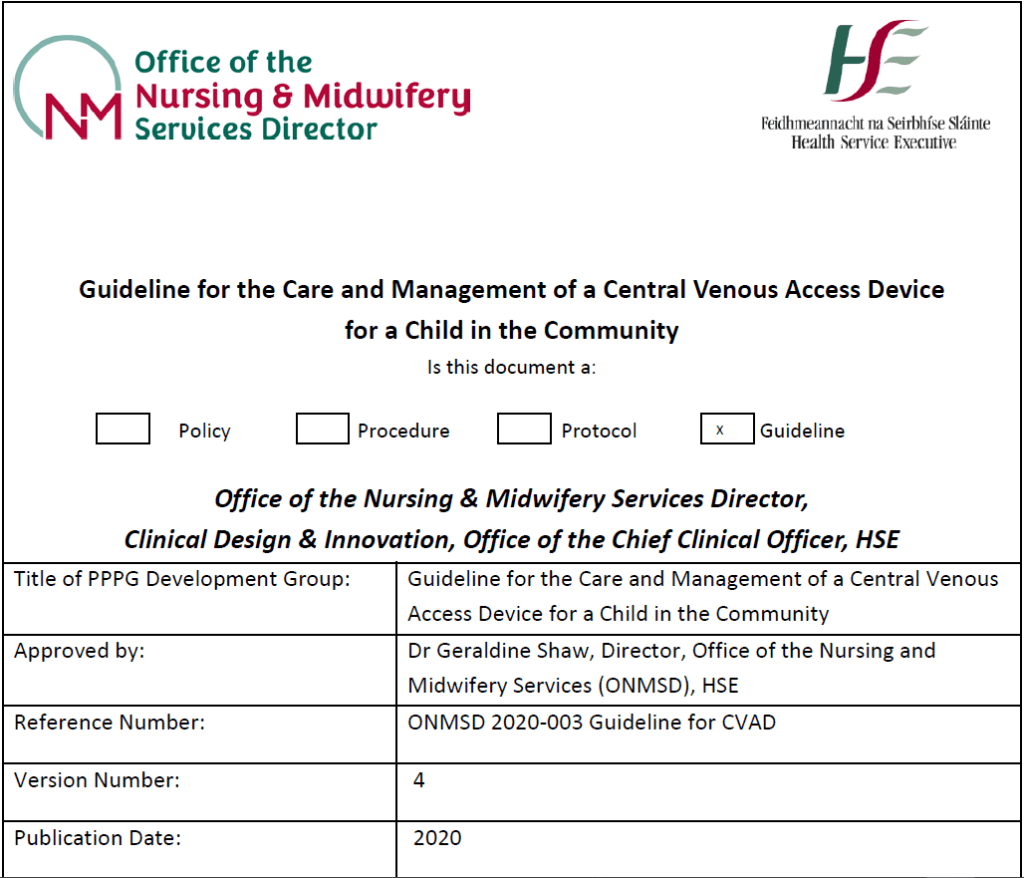
The page contains an HSE Guideline for the care and management of a Central Venous Access Device (CVAD) in a child in the community and details of an available eLearning module that is now live on HSEland
The 2020 Programme for Government commits to publishing a new Palliative Care Policy for Adults to update the existing policy from 2001. This will reflect the many developments in end-of life care and international best practice.
This document concludes the work of an Expert Advisory Group established by the Chief Clinical Officer of the HSE to set out an operational and governance framework for palliative care for children with life limiting conditions in the community. It sets out the current approach to care, limitations within the service and the proposed model for both operational and clinical governance.
The purpose of the clinical guidance is to promote collaborative working across primary, secondary and tertiary care and through effective communication, involvement of the correct professionals to coordinate the continuing care and support necessary for the child/young person and their parents/guardians