
Northern Ireland guidelines on converting doses of opioid analgesics for adult use 2023
This document outlines the definition, cause, prevalence and evidence based practice for the Specialist Palliative Care Allied Health Professional (AHP) interventions to manage symptoms frequently presenting in those living with advanced incurable illness
Management of Symptoms in Adults in the Last Days of Life
This guidance relates to the prescribing of medicines to manage symptoms for patients in the last days of life. Not every patient will require symptom management but individual need can be difficult to anticipate and therefore proactive prescribing
Care of dying adults in the last days of life
This guideline covers the clinical care of adults (18 years and over) who are dying during the last 2 to 3 days of life. It aims to improve end of life care for people in their last days of life by communicating respectfully and involving them, and the people important to them, in decisions and by maintaining their comfort and dignity. The guideline covers how to manage common symptoms without causing unacceptable side effects and maintain hydration in the last days of life.
Guidance for the Management of Symptoms in Adults in the Last Days of Life
Guidance for the Management of Symptoms in Adults in the Last Days of Life
Care of the Deceased Patient and their Family: A Guideline for Nursing Practice in Northern Ireland
‘Care of the Deceased Patient and their Family: A Guideline for Nursing Practice in Northern Ireland’, provides guidance to nurses and midwives working in any setting on how to achieve the delivery of safe, sensitive, effective and person-centred nursing care to a deceased person and their family, friends and carers.
Definition and Competencies for Key Worker Function
The aim of this paper is to provide a high level definition for Key worker function and competencies.
Palliative Care Aide Memoire
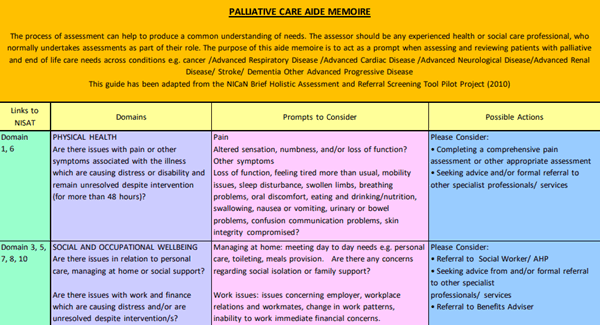
The process of assessment can help to produce a common understanding of needs. The assessor should be any experienced health or social care professional, who normally undertakes assessments as part of their role. The purpose of this aide memoire is to act as a prompt when assessing and reviewing patients with palliative and end of life care needs across conditions.
National Audit of Care at the End of Life (NACEL) – Fourth Round
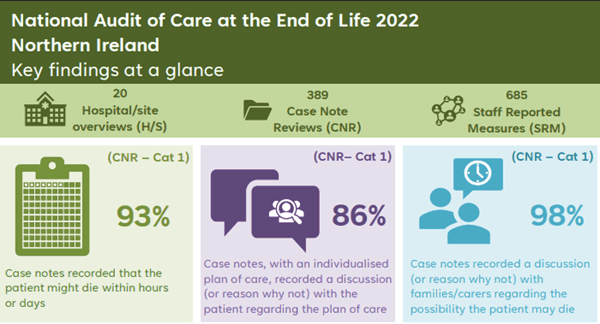
The National Audit of Care at the End of Life (NACEL) in Northern Ireland was commissioned by the Northern Ireland Public Health Agency, on behalf of the Regional Palliative Care in Partnership Programme.
Your Life and Your Choices: Plan Ahead

The Your Life and Your Choices: Plan Ahead booklet explains how you can plan ahead for your future care.
End of Life Care Operational System (ELCOS)
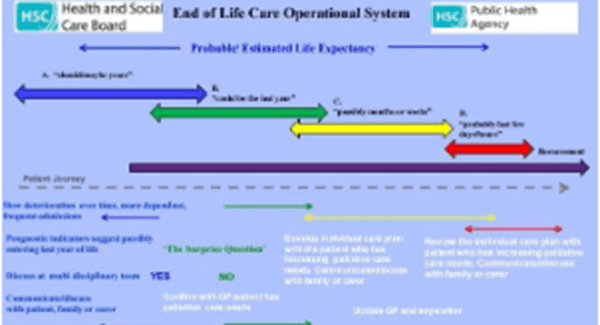
ELCOS aims to ensure that people who have been identified as possibly in the last year of life have details of their personalised care plan and preferences for care, including any Advance Care Plan available as part of their care record.