
Care of the Deceased Adult in Hospital and Those Important to Them
Developed collaboratively by the regional Trust Bereavement Coordinators, the guideline aims to support nurses and midwives in delivering compassionate, safe, consistent and person-centred care after death. The document reflects best practice, professional standards and the shared commitment across the region to ensuring dignity and respect for the deceased and for those important to them.
Huntington’s Disease Association – New professional guidelines to support care for people affected by Huntington’s
Professional guidelines designed to support those working with people affected by Huntington’s disease, including end of life management
Integrated Care Pathway for Children with Complex Physical Health Care Needs
This pathway guides community services in meeting the needs of families, children and young people, aged up to 18 years, who have complex physical healthcare needs. This is defined as: Children (and young people) with complex physical healthcare needs are those who require a range of additional support services beyond the type and amount required by children generally and those usually provided to children with impairments and long-term illnesses.
NI Guidance for the Management of Diabetes in Adults During the Last Days of Life
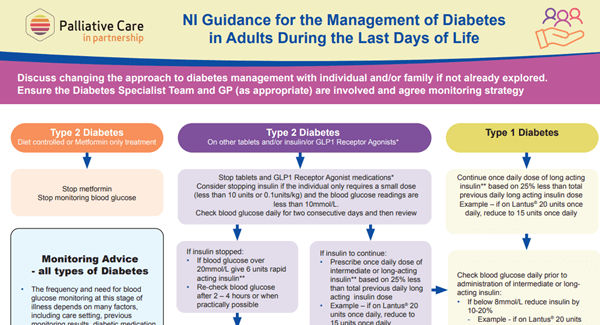
Discuss changing the approach to diabetes management with individual and/or family if not already explored. Ensure the Diabetes Specialist Team and GP (as appropriate) are involved and agree monitoring strategy
Guidance for the management of symptoms in adults with Heart Failure at the end of life
This guidance has been developed for healthcare professionals managing heart failure symptoms when end of life is expected within weeks to days. For these patients it would likely be inappropriate to monitor bloods at this stage of a patient’s illness. However due to the trajectory of heart failure it is advised to use clinical judgement to monitor bloods or vital observations should the end of life stage become prolonged or longer than predicted.
HSC Guidance Document for Subcutaneous Syringe Pump Use in Adults
This guidance has been designed to support both healthcare professionals and patients, this guidance provides practical, evidence-based insights to support safe and effective use of subcutaneous syringe pumps for adults across Northern Ireland. It provides a regional standardised approach to consent, patient information, prescribing, administration, education, training, audit and governance. This regional guidance aims to promote safer subcutaneous medication delivery and improved patient outcomes by offering practical patient centred advice, clear processes, and guidance to reduce the risk of error.
Northern Ireland Antenatal Pathway
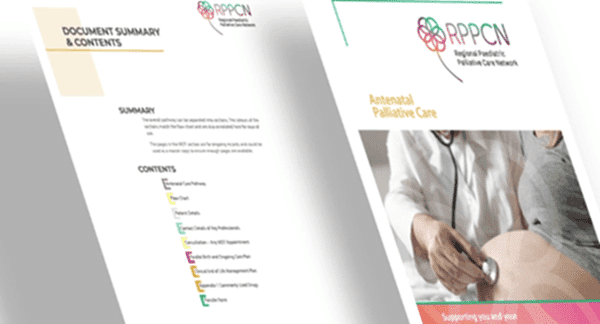
The Northern Ireland Regional Paediatric Palliative Care Network (RPPCN) have developed a resource to support families and professionals where a diagnosis of a potentially life limiting, or life-threatening condition has been made at antenatal stage. The resource will help inform parental decisions and promote effective communication between professionals to ensure the most effective supports are put in place.
Management of Symptoms in Palliative Care. The Role of Specialist Palliative Care Allied Health Professionals
This document outlines the definition, cause, prevalence and evidence based practice for the Specialist Palliative Care Allied Health Professional (AHP) interventions to manage symptoms frequently presenting in those living with advanced incurable illness
Northern Ireland guidelines on converting doses of opioid analgesics for adult use 2023
This document outlines the definition, cause, prevalence and evidence based practice for the Specialist Palliative Care Allied Health Professional (AHP) interventions to manage symptoms frequently presenting in those living with advanced incurable illness
Management of Symptoms in Adults in the Last Days of Life
This guidance relates to the prescribing of medicines to manage symptoms for patients in the last days of life. Not every patient will require symptom management but individual need can be difficult to anticipate and therefore proactive prescribing